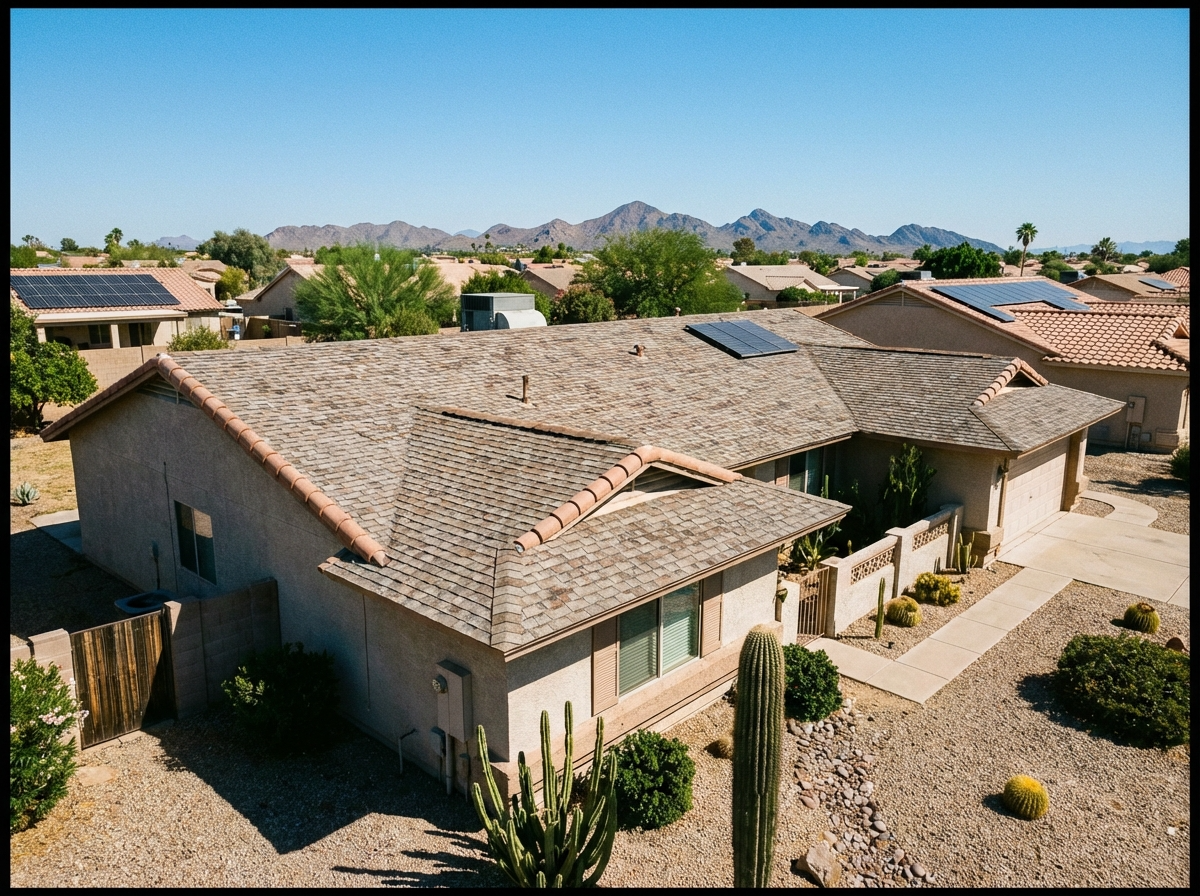

Most residential roof replacements in Phoenix take 1 to 3 days for a standard shingle roof and 3 to 5 days for concrete tile, but total project time from contract signing through scheduling, permitting, and inspection typically runs 1 to 3 weeks. That gap between days on the roof and weeks to completion surprises many homeowners. The two timelines are very different, and both matter when planning a replacement.
Phoenix conditions add pressure that national averages don’t account for. Extreme summer heat pushes most crews to work during early morning hours only, which shortens the productive window each day. Monsoon season, roughly July through September, brings afternoon storms that can interrupt tear-off work and delay drying time for underlayment and coatings. Tile and flat roofs, both common across Phoenix neighborhoods, also require more steps than a standard shingle job.
How Long Does a Roof Replacement Take Based on Roof Size and Type?
The single biggest driver of timeline is roof size combined with material type. A 1,000 to 1,500 sq ft asphalt shingle roof can be done in a single day, while a 2,500 to 3,500 sq ft concrete tile roof can take up to 7 days in Phoenix conditions.
| Roof Size (sq ft) | Material Type | Crew Size | Estimated Installation Days | Phoenix-Adjusted Estimate |
|---|---|---|---|---|
| 1,000 to 1,500 | Asphalt shingle | 3 to 4 crew | 1 day | 1 to 1.5 days |
| 1,500 to 2,500 | Asphalt shingle | 3 to 4 crew | 1 to 2 days | 1.5 to 2.5 days |
| 1,500 to 2,500 | Concrete tile | 4 to 6 crew | 3 to 4 days | 4 to 5 days |
| 2,500 to 3,500 | Concrete tile | 4 to 6 crew | 4 to 5 days | 5 to 7 days |
| Any size | Flat roof (foam or modified bitumen) | 2 to 4 crew | 1 to 3 days | 1 to 3 days |
Concrete tile is the most common residential roofing material in suburban Phoenix, demanding a much larger labor commitment than a standard shingle installation. Individual tile placement, mortar work at the ridges, and heavy material handling in triple-digit heat all slow the process down.
Adding even 1,000 sq ft to a concrete tile job can push the timeline by 2 or more days, so roof size matters far more than crew effort alone. Flat roofs hold relatively steady across sizes because the application process is more uniform. Homeowners considering material options can review residential tile roof installation and replacement to understand what the full scale of a tile project involves.
What Factors Make a Roof Replacement Take Longer Than Expected?
At least 6 common variables can push a Phoenix roofing project beyond its original schedule. Some delay the start date, while others emerge only after tear-off begins.
- Deteriorated underlayment: If the existing underlayment has failed across the entire roof deck, a full replacement is required instead of a spot swap. This adds 0.5 to 1 day to the job.
- Roof decking damage: Rotted or warped roof boards discovered during tear-off must be replaced before new material goes down. Each affected section adds 1 to 2 days, and the true extent often isn’t visible until the old roof is already off.
- Permit processing in Phoenix: The City of Phoenix requires permits when changing roofing material type or making structural repairs. Processing typically takes 3 to 10 business days. Same-material reroofs are often exempt, but skipping a required permit can cause failed inspections or problems at resale.
- Monsoon afternoon storms: Open tear-offs cannot continue in rain. A single monsoon between July and September can delay a project by 1 to 3 days, and multiple storms in 1 week can stack those delays.
- Extreme heat above 105 degrees Fahrenheit: Summer temperature spikes shorten crew shifts to 4 to 5 hours of productive work during daylight hours, stretching single-day jobs into multi-day jobs.
- Multi-story or steep-pitch roofs: Roofs with steep slopes or multiple stories require additional safety rigging setup, which adds time before any installation work begins.
Scheduling lead times from Phoenix roofing contractors also add time before any of the above even applies; most homeowners wait 2 to 6 weeks for a crew during peak fall and spring seasons. Because crew availability ultimately dictates your start date, homeowners must account for this waiting period rather than focusing solely on the days required for installation.
Does the Time of Year Affect How Long a Roof Replacement Takes in Phoenix?
Yes, season is one of the biggest factors affecting how long a Phoenix roof replacement takes from start to finish. During cooler months (October through April), crews of 4 to 6 can work full 8- to 10-hour shifts, keeping projects on schedule. During summer peak heat (June through September), effective working windows shrink to just 4 to 6 hours starting as early as 4 to 6 AM, which can add 0.5 to 1.5 days to any project.
| Season | Typical Crew Hours Per Day | Scheduling Lead Time | Added Timeline Risk |
|---|---|---|---|
| Cooler Months (Oct to Apr) | 8 to 10 hrs | 2 to 6 weeks | Low |
| Summer and Monsoon (Jun to Sep) | 4 to 6 hrs | 1 to 3 weeks | Moderate to High |
Monsoon season (July through September) adds another layer of risk beyond just heat. An open tear-off left overnight during a monsoon weather window exposes roof decking and underlayment to real moisture damage. Contractors may delay tear-off start by 1 to 3 days to lock in a clean weather window, or charge a premium for emergency roof tarping if storm risk appears mid-project. Fall and spring remain the most predictable scheduling windows in Phoenix; shorter lead times are not always worth the added risk of summer scheduling.
How Does Roof Replacement Timeline Affect Total Cost in Phoenix?
Longer installation timelines mean higher labor costs, and in Phoenix, emergency or rush scheduling can add 10% to 20% to your total project cost, especially if consecutive afternoon storms force crews to scramble for makeup days.
| Material | Average Installed Cost Per Square (100 sq ft) | Typical Total Cost for 2,000 sq ft Roof | Estimated Installation Days |
|---|---|---|---|
| Asphalt Shingle | $350 to $500 | $7,000 to $10,000 | 1 to 2 days |
| Concrete Tile (re-tile over new underlayment) | $600 to $900 | $12,000 to $18,000 | 3 to 5 days |
| Foam (SPF flat roof) | $400 to $600 | $8,000 to $12,000 | 1 to 3 days |
| Modified Bitumen (flat roof) | $300 to $500 | $6,000 to $10,000 | 1 to 2 days |
Concrete tile costs nearly double what asphalt shingles cost upfront, but the math looks different over time. Asphalt shingles typically last 15 to 25 years in Phoenix’s heat, while concrete tile roofs last 40 to 50 years, with underlayment replacement recommended at the 20 to 25 year mark.
For homeowners planning to stay 10+ years, concrete tile’s higher upfront cost and longer 3 to 5 day installation window translate into a measurable long-term value that asphalt simply cannot match in this climate. Opting for a proactive replacement during the predictable fall or spring months eliminates the financial risk of navigating sudden summer storm damage.
How Should You Prepare for Your Roof Replacement Timeline?
For most Phoenix homes under 2,000 sq ft with asphalt shingles, clearing your schedule for 1 to 2 full days is sufficient, but tile roofs require 3 to 5 days minimum, so preparation timing depends heavily on what material is going on.
- Get 2 to 3 quotes at least 3 to 4 weeks before your desired start date. Scheduling slots fill fast during fall and spring, and rushing this step often means accepting whatever crew is available rather than the one that fits your project.
- Confirm permit requirements before signing anything. Same-material reroofs in Phoenix are often permit-exempt, but switching materials, say, from asphalt shingles to concrete tile, requires a permit that can take 3 to 10 business days to process.
- Clear attic access and move vehicles the night before work starts. Dumpsters and material deliveries arrive early, and blocked driveways slow down the crew before a single shingle comes off.
- Plan for noise disruption of 6 to 10 hours per day for the full duration of the project. Tear-off is the loudest phase, but nail guns and material handling carry through the entire job.
- Arrange for pets and young children to be away from home on tear-off days. Falling debris, open roof sections, and heavy foot traffic above create real safety concerns during that phase.
- During monsoon season, confirm a weather window of at least 2 consecutive clear days before scheduling tear-off. A single afternoon storm between July and September can delay an open tear-off by 1 to 3 days.
Ask every contractor bidding the job to provide a written project schedule that identifies the start date, estimated completion date, and a contingency plan for weather delays. Having this documentation provides clear expectations for both parties and establishes a definitive protocol for handling unexpected weather delays without resorting to verbal arguments.
A contractor who won’t commit to a written schedule is a contractor worth passing on. Homeowners can also schedule a residential roof inspection before requesting quotes to identify hidden roof decking or underlayment issues that could extend the project timeline.
Ready to Schedule Your Roof Replacement? Here’s How to Start.
Getting a written timeline commitment, not just a price quote, is the single most important first step when hiring a Phoenix roofing contractor. A quote tells you the cost. A written schedule tells you when work starts, when it ends, and what happens if a monsoon delay pushes the job.
Fall and spring booking windows fill 2 to 6 weeks out. Homeowners planning an October through April replacement should start reaching out in August or September to lock in the crew and dates they actually want, not whoever still has an opening.
Not ready to schedule? Learn more about residential roof replacement.